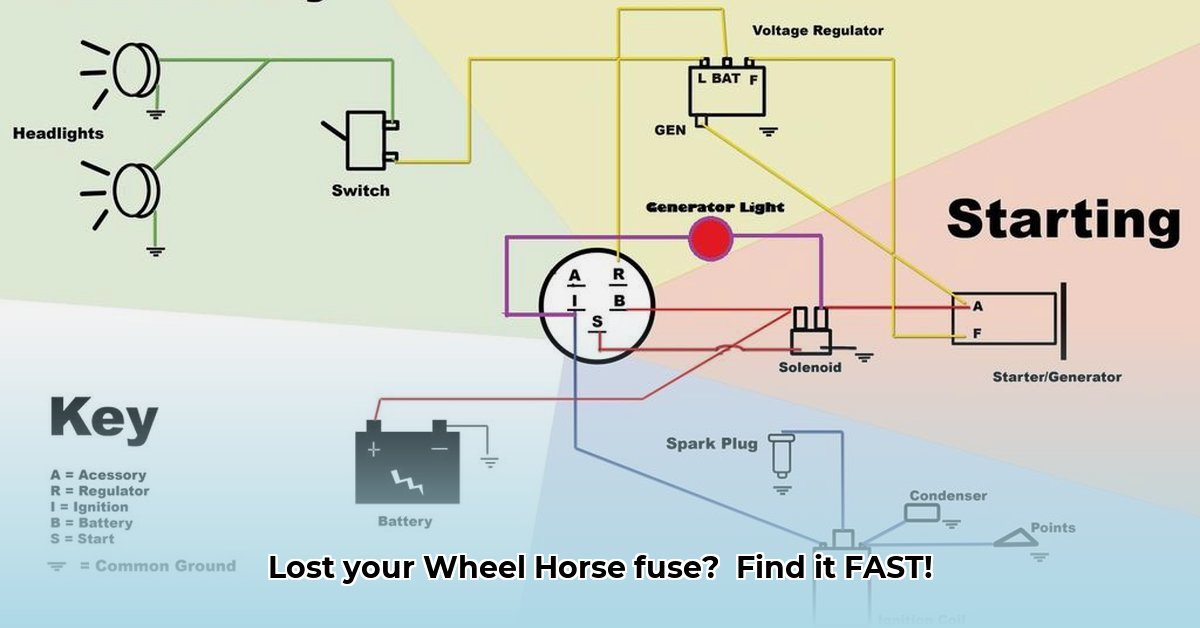
So, your 1974 Wheel Horse tractor is experiencing electrical gremlins? Don't worry, a blown fuse is a common, often easily fixable, problem. This guide will walk you through locating the fuse box, identifying a blown fuse, and safely replacing it. We'll also offer troubleshooting tips for persistent issues. Let's get your Wheel Horse back up and running!
Locating Your 1974 Wheel Horse Fuse Box: A Step-by-Step Guide
Finding the fuse box on a vintage tractor like your 1974 Wheel Horse can sometimes feel like a treasure hunt. The location varies slightly depending on the specific model. But don't despair; we'll cover the most common hiding spots. Before you start, remember: Safety First! Always disconnect the negative (-) terminal of your tractor battery before working with any electrical components. This crucial step prevents short circuits and protects you from electrical shock.
Common Fuse Box Locations
Under the Hood, Near the Battery: This is the most common location. Look for a small, rectangular box, often black or dark-colored, near the battery and other electrical components.
Under the Dashboard, Driver's Side: If you don't find it under the hood, check underneath the dashboard on the driver's side. A flashlight might be helpful for this slightly less accessible location.
Behind the Grill (Less Common): In some models, the fuse box is cleverly concealed behind the front grill. Accessing this location requires partial disassembly, so be sure you are comfortable with this step before proceeding. If you're unsure, it's best to seek professional help.
Remember, referring to your owner's manual (if available) will provide model-specific information and diagrams to pinpoint your fuse box. Online Wheel Horse communities also offer a wealth of knowledge and visual aids from other owners.
Identifying and Replacing a Blown Fuse
Once you've located the fuse box, let's find the culprit!
Identifying a Blown Fuse
Carefully examine each fuse within the box. A blown fuse may show signs of damage, such as a broken filament or a blackened appearance. You might also notice some melting in the fuse housing. Compare suspicious fuses to ones you know are working to confirm your suspicions. Note the amperage rating printed on the blown fuse; you'll need an exact replacement.
Replacing the Fuse: A Step-by-Step Process
Disconnect the Battery: We've already emphasized this important safety precaution. Ensure the negative (-) battery terminal is fully disconnected.
Remove the Blown Fuse: Using a pair of fuse pullers (often built into the fuse box) or needle nose pliers, carefully remove the blown fuse.
Install the Replacement Fuse: Install a new fuse with the exact same amperage rating as the blown fuse. Using the wrong amperage can create more problems or possibly damage your tractor's electrical system.
Reconnect the Battery: Once the replacement fuse is secured, carefully reconnect the negative (-) battery terminal.
Test the System: Turn on the affected system (lights, starter, etc.) to verify the replacement fuse is working correctly.
Troubleshooting Persistent Fuse Issues
If you replace a fuse, and it blows again immediately, there's a more significant problem at play. Repeatedly blowing fuses almost always indicates a short circuit or a faulty component in your tractor's electrical system. Simply replacing fuses won't solve the underlying issue. You'll need to troubleshoot the circuit protected by that fuse to identify the cause of the short circuit. This might involve tracing wires, checking connections, and potentially replacing a faulty component. Consider consulting a professional mechanic or referencing a wiring diagram specific to your 1974 Wheel Horse model if you feel uncomfortable conducting this type of diagnostic work.
Key Point: Ignoring a persistent fuse problem can lead to more extensive damage, including potential fire hazards. Don't just repeatedly replace the fuse—address the root cause!
Proactive Maintenance: Preventing Future Fuse Problems
Regularly inspecting your tractor's fuses and electrical system can prevent future headaches. A simple visual inspection can catch potential problems before they become major issues. This proactive approach will also save you time and money in the long run.
Remember: a little preventative maintenance goes a long way in keeping your 1974 Wheel Horse running smoothly for years to come!